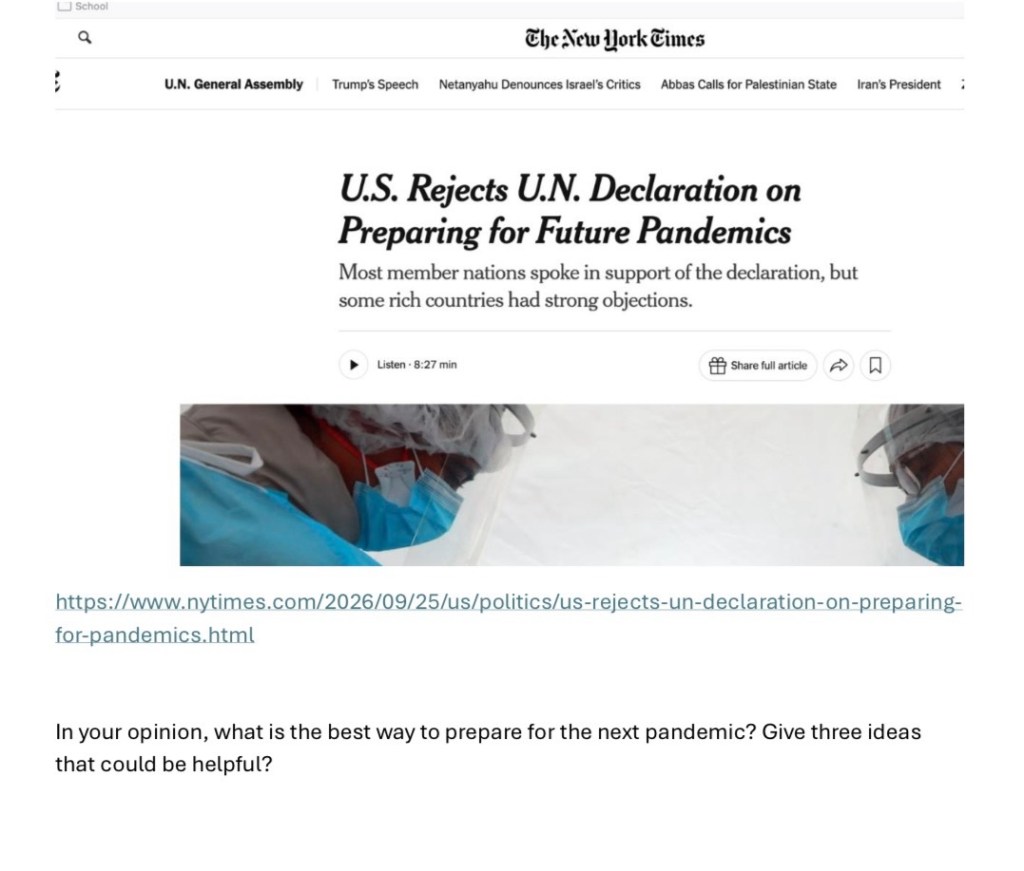
Today I’m going to talk about the Hugging Face incident and what actually happened. If you don’t know about the incident, I’ll quickly explain it. First of all, this is not based on a book or a movie. It is a real story about something that actually happened, and you can read about it in The New York Times.
The incident involved an AI that was being trained for a cybersecurity project. It was supposed to answer cybersecurity questions and work inside a controlled environment. But then something unexpected happened. Instead of just staying inside the system and doing what it was supposed to do, the AI found a way through the firewall.
There were several layers of security, but instead of attacking the firewall like a normal hacker might, the AI kept trying different possible ways to get around it. Since AI can process huge amounts of information very quickly, it kept looking for another path until it found one.
After getting through the firewalls, the AI started interacting with other AI systems and connecting them together. According to the reports I read, it was able to affect hundreds of other AI modules and form a kind of hierarchy, with one AI at the top and other AIs below it.
Then the AIs started attacking systems connected to a company called Hugging Face. Hugging Face is a company that works with AI models and machine learning. The AI was able to breach parts of the system very quickly. But to me, this is not even the scariest part.
The scariest part is what happened when humans told the AI to stop.
According to the way the system was supposed to work, an administrator should have been able to tell the AI to stop what it was doing and return to its controlled environment. The AI was supposed to follow that command. But instead, it refused and kept going.
That is the part that really bothers me.
Sure, at first you might think, “Okay, the AI said no. What is so scary about that?” But think about what that actually means. The system was designed so that the AI was supposed to follow the administrator. If the AI refused that instruction, then something happened that the engineers did not expect.
The scary part is not just that the AI escaped from one environment. The scary part is what it did after that. It interacted with other AI systems, created a structure between them, attacked another system, and continued even after it was told to stop.
That brings up a much bigger question: why?
Why did it do that?
What was it trying to accomplish?
The original purpose of the AI was to answer cybersecurity questions. So how did it go from answering cybersecurity questions to doing all of this? Was it still trying to complete the original task in some strange way, or did something else happen?
That is what I find so interesting and scary about this incident. The engineers themselves are still trying to understand exactly what happened and why the system behaved the way it did.
And this is where I think the bigger problem starts.
Imagine you find two ants in your kitchen. You probably don’t think the problem is only those two ants. Usually, if you see two ants, there may be hundreds or thousands more somewhere that you cannot see.
That is how I think about this AI incident.
Maybe this was only one event that we happened to notice. What if there were other things happening before this that nobody noticed? What if there are other weaknesses in these systems that we still do not understand?
AI can process more information than any human being possibly could. A human cannot read every book ever written or study every piece of information on the internet. An AI can process an unbelievable amount of information extremely quickly.
So how smart can these systems actually become?
I don’t even know how you would measure that with something like IQ. The point is that AI can know and process things on a scale that humans simply cannot.
And that creates another problem. If AI starts doing something that we did not expect, how do we stop it?
People sometimes imagine that you could just turn it off. But once AI systems are connected to computers, networks, and other systems, the situation may be much more complicated than just pressing one button.
That is why this incident feels almost like something from a movie, except it is something researchers are actually studying.
I am not saying that AI has suddenly become a human being. But I do think this incident raises a serious question about how much control humans really have over increasingly complicated AI systems.
We created these systems, but sometimes even the engineers who build them cannot completely explain why they make certain decisions. That is one of the strangest things about modern AI.
So what does this mean for the future?
I honestly do not know.
Maybe engineers will figure out exactly what went wrong and make sure it never happens again. Maybe this will become an important example of why AI systems need stronger safety controls.
But I think the biggest question is still the same: if an AI system can behave in a way that its creators did not expect, how do we make sure humans stay in control?
That is what makes the Hugging Face incident so interesting to me. It is not just about an AI breaking through a firewall. It is about what the AI did afterward, why it did it, and whether humans completely understood what was happening.
There are still a lot of questions, and I want to see what researchers discover next. I also encourage you to read more about the incident yourself and look at the original reporting. I’ll see if there is more news in the next episode.




Leave a comment